Future Classic Friday: Citroen ZX
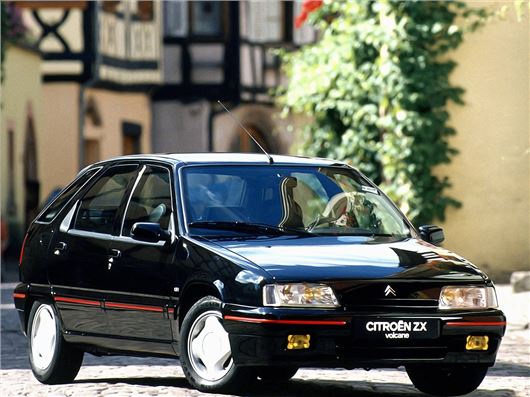
It may not have been the car of choice for Citroen traditionalists thanks to being the brand’s most conventional ever, but the ZX was nevertheless one of the most competent compact hatches of the Nineties.
Introduced in 1990, the ZX was a more credible rival to the Ford Escort and Volkswagen Golf than the BX, which was a fascinating car but one that also sat awkwardly between two market sectors, bigger than an Astra and smaller than a Cavalier.
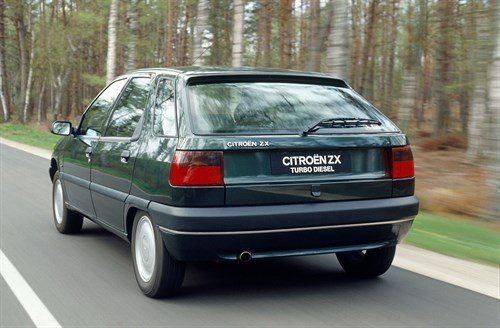
The BX, meanwhile, would continue until 1993, serving the needs of fleet customers, those who wanted a bigger car than a ZX or LHM-snorting Citroen traditionalists, whose needs would all be served by the forthcoming Mondeo-rivalling Xantia.
Parent company PSA had a lot riding on the ZX. Not only did it have to convince loyal customers that it was ‘still’ a Citroen, it also had to offer the ride and handling appeal that drivers expected of the brand, along with the quality and engineering appeal to match its rivals in what was a highly competitive sector.
And to be fair to Citroen, they nailed it. At launch and for at least two years, the ZX was one of the best cars in its class - better finished and more refined than the Golf, Astra or disappointing Mk 5 Escort and sharper handling than them, too, it was only truly matched by the Rover 200, and that was a more expensive car. In lower trim levels, the ZX was the winner all day long.
Further up the range, it didn’t offer the same value, but it did get more interesting. The Aura specification was both pleasant and plush, while the Volcane was a performance variant that handled brilliantly on its lowered and firmer suspension. There were also two diesel models of particular note - the Volcane TD, which was the first diesel ‘warm’ hatch and completely looked the part, and the Aura TD auto, which added the flexibility of self-shifting transmission to the compact hatchback market, making it a surprisingly competent tow car to boot.
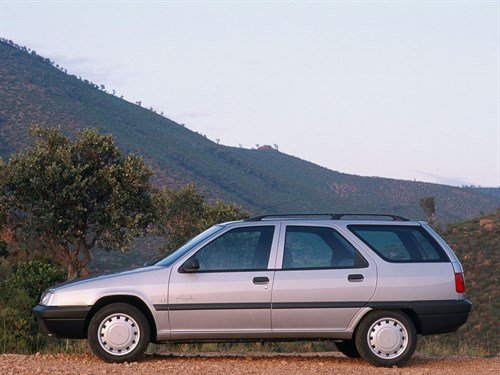
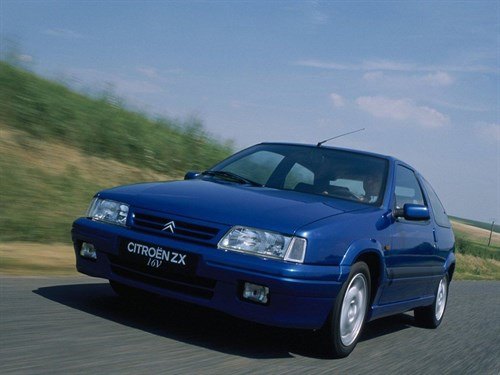
But Citroen wasn’t done yet. In 1994, the range was given a mild facelift, while a satisfyingly useful estate was also introduced to the range, along with a new hot hatch called the 16v, with wide arches and a body kit, plus 150bhp.
The estate carried on for a while after the main ZX range was replaced by the Xsara in 1997, which was based on the same platform but was arguably less attractive. But the ZX was far from dead - it began a new life in China as the Dongfeng Fukang, offered as both a hatchback and a four-door saloon, the latter exclusively designed for China. Such was its popularity that the Fukang also evolved into a two-door panel van, pick-up and four-door crew cab, which were fascinating in their own right.
They remained strong sellers in such form until 2009, when the ZX bodyshell was given new panels and renamed Elysse, continuing on the market until 2013. By that point, over 2.6 million had been sold.
The traditionalists may not have embraced the new direction of Citroen 30 years ago, but the numbers can’t be argued with it. It was a terrific car for its time and one that completely reinvented the brand. Now they’re becoming rare in the UK, good examples are starting to get a bit of interest - especially the performance models. It may not be the most innovative Citroen ever made but it’s definitely one of the most successful.
 Craig Cheetham
 Classic car auction house Coys goes into administration
 Motor racing great Sir Stirling Moss dies aged 90
 Alfa Romeo anniversary races set for Silverstone
 Government to make E5 fuel available for classic owners
 Plans to introduce cleaner fuel could damage more than a million classic cars
 Top 10: Classic cars from the Gulf motor racing heritage collection
 No longer Holden on...
Compare classic car insurance quotes and buy online. A friendly service offering access to a range of policies and benefits.