Future Classic Friday: Toyota Prius
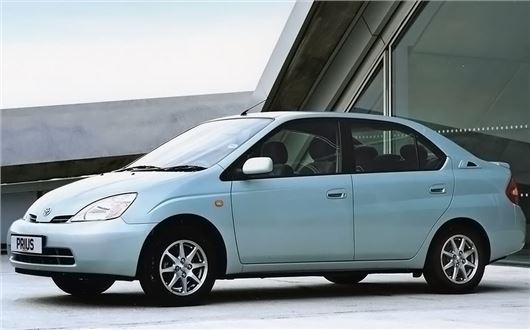
If you think that hybrid technology is a modern phenomenon, then think again.
The original Toyota Prius comes of age this year, celebrating its 21stbirthday in style by remaining the best-selling hybrid car across the world, despite a vast influx of imitators and clones.
The original Prius is a rare thing these days. It was never sold in huge volumes in the UK, and many of those early cars were bought back by Toyota to be dismantled and analysed, proving that the manufacturer was particular about ensuring its technology has the staying power to last the distance.
And that is something it sure has. Priuses with over 200,000 miles on the clock are not uncommon and in most cases are still going strong.
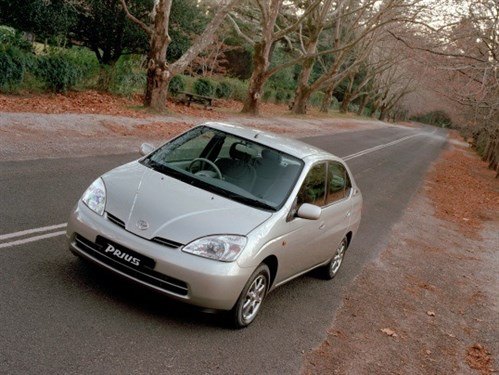
So with that in mind, is there a case to suggest that the fish-eyed Mk 1 model has guaranteed future classic status?
Given that car collectors tend to gravitate towards vehicles that marked a turning point in design or technology, it makes a strong case for itself. That early incarnation of Toyota’s ‘Hybrid Synergy Drive’ may seem a bit clunky in a modern context, not least its LCD-based digital displays and overly weird, plasticky dashboard, but it’s a decent car and one that is more than capable of holding its own in modern traffic.
It wasn’t just the hybrid system that was innovative, either. The Prius used a 1.5-litre engine using the Atkinson combustion cycle for maximum efficiency. It works by having a smaller compression ratio than expansion ratio, or put simply, it allows gas to escape before starting its compression cycle, thus deliberately reducing the engine’s power output to save fuel. Its 70bhp was equivalent to that produced by a 1.0-litre Yaris, but delivered in a more relaxed manner.
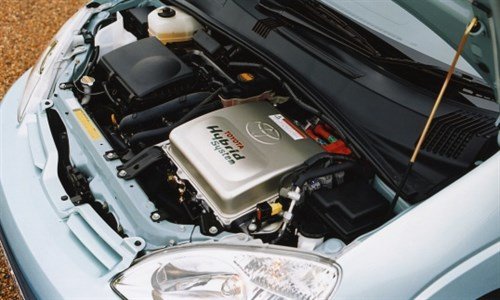
The engine was complemented by a 6.5aH nickel metal hydride battery (as opposed to the lithium-ion units used by most hybrid cars of today) developing the equivalent of 40bhp, which would power the car on its own in slow-moving traffic, or complement the petrol engine under more demanding driving conditions, supplementing the 70bhp petrol engine with an extra boost of power while using kinetic energy derived from braking and coasting to redeliver charge to the battery system - a system known as regenerative braking.
It was simplicity itself to drive, too. At low speeds, the Prius would trundle along in near silence, powered by its batteries and batteries alone. Yet on the open road, it drove pretty much like a normal car, albeit one with a rather coarse sounding engine note, not helped by its CVT transmission, operated from a column-mounted lever.
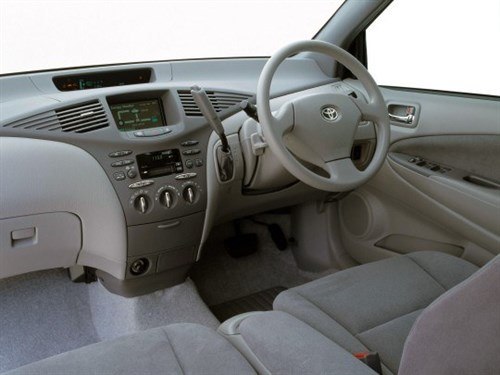
It was clever stuff, and as the original Prius proved, it was relatively simple to install into a normal-sized family car.
Indeed, the Prius Mk 1’s only real downfall was that it looked so, well, weird…
It’s understandable that Toyota wanted to create a car that looked different. It needed to not only to differentiate the Prius from the humdrum Corolla, but also for it to get noticed out on the open road. Only by people asking ‘what’s that?’ did anyone really find out about it, and it certainly had a distinctive look about it. Compare that to the current crop of hybrid cars, which look just like the conventional models they’re based on.
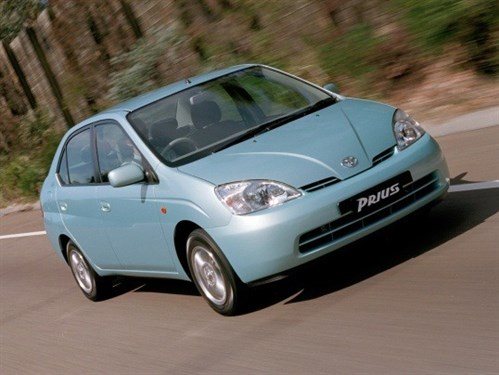
The original Prius, then, was a game changer. A weird and wonderful one that held a niche appeal when new and is even more obscure today, but one that we believe has future classic credentials that will only evolve further as its place in motoring history becomes more notable.
You can still pick one up for less than a grand if you look hard enough - and if you do, it could be a safe and sensible investment, as well as something of a talking point.
 Craig Cheetham
 Classic car auction house Coys goes into administration
 Motor racing great Sir Stirling Moss dies aged 90
 Alfa Romeo anniversary races set for Silverstone
 Government to make E5 fuel available for classic owners
 Plans to introduce cleaner fuel could damage more than a million classic cars
 Top 10: Classic cars from the Gulf motor racing heritage collection
 No longer Holden on...
Compare classic car insurance quotes and buy online. A friendly service offering access to a range of policies and benefits.