Future Classic Friday: BMW 5-Series E39
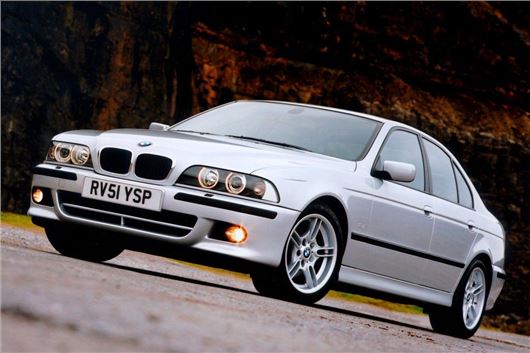
There are certain cars that come along that are instantly brilliant, and go straight to the top of their class. BMW's 'E39' 5-series is one such car - from the minute it made its debut at the 1995 Frankfurt Motor Show, replacing the much-loved E34, the executive saloon was touted as one of the best cars the German company had ever made.
By the time it hit showrooms in 1996, the E39 had stoked up even more enthusiasm. The media were in raptures over the car's impeccable driving dynamics, while the build quality, performance and comfort were also first rate.
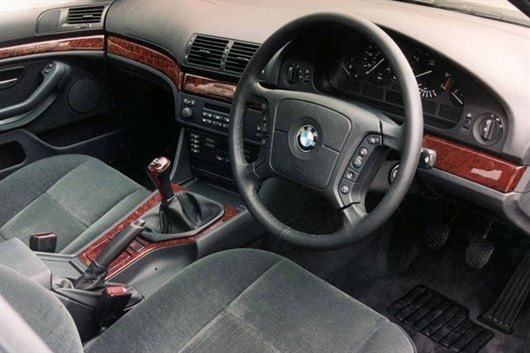
The E39 was also an impressive piece of engineering, using more lightweight materials than any previous BMW, including a new aluminium subframe and - for the first time in a 5-series - rack-and-pinion steering. The new set-up gave fine handling balance and a level of agility that made the E39 feel like a much smaller car from behind the wheel.
All variants were punchy - even the entry level 520i had 150bhp from its 2.0-litre straight six, while the 523i and 525i models were pleasingly rapid. If you wanted proper poke, though, the real stars of the range were the new V8s - the 535i and 540i. Refined, powerful and with a wonderful exhaust note, they were also surprisingly economical, especially on the motorway. It's no wonder, then, that the E39 was widely regarded as the best executive car on the market by all of the contemporary car magazines.
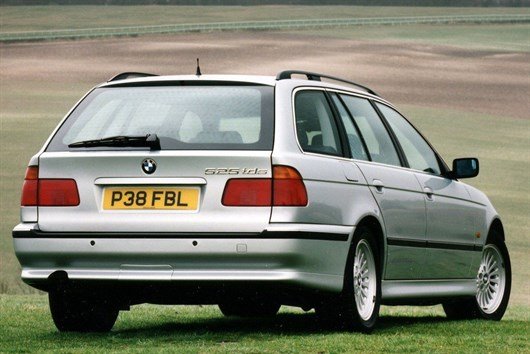
The E39's armoury was strengthened even further in late 1996, with the addition of the 'Touring' estate model, which featured a pop up rear screen and an extremely capacious load bay. If anything, the Touring was even more handsome than the well-proportioned saloon, and again went instantly to the top of its class.
Indeed, the only weak link in the range was the diesel engine. The 525 TDS used the old 141bhp six-pot turbodiesel from the E34 (also found in the Vauxhall Omega), and while it was a tough unit, refinement and performance weren't its strong points.
BMW's answer was, in 1998, to yet again create a class leader. The new 530d used a three-litre six-cylinder engine newly developed for the model, with incredible performance and torque. It was, in the eyes of many, the best diesel car in the world. It was followed up in 2000 with a 2.0-litre four-cylinder turbodiesel in the fleet friendly 520d to coincide with a mild facelift - a car that might not sound that exciting, but was more than capable of delivering a satisfying drive.
The E39, then, was a true great. One of the best cars of its era, if not the best in terms of its context. Its status as a future classic is guaranteed, but don't buy one with your eyes closed. Early 530ds aren't renowned for their reliability, while E39s are currently cheap enough for people who can't afford to properly maintain a BMW to own one, and that means there are several ropey high milers out there, some with questionable modifications.
Don't buy one of those. Instead, seek out a well maintained and totally standard example. A good maintenance record is far more important than mileage, and be wary of rust, especially around the rear arches, trailing edge of the sills and on Touring tailgates. E39s are tough cars, but they're not immune to rot, especially with the oldest examples now being over 20 years old. They don't look it, though, do they? A truly handsome and brilliant car.
 Craig Cheetham
 Classic car auction house Coys goes into administration
 Motor racing great Sir Stirling Moss dies aged 90
 Alfa Romeo anniversary races set for Silverstone
 Government to make E5 fuel available for classic owners
 Plans to introduce cleaner fuel could damage more than a million classic cars
 Top 10: Classic cars from the Gulf motor racing heritage collection
 No longer Holden on...
Compare classic car insurance quotes and buy online. A friendly service offering access to a range of policies and benefits.